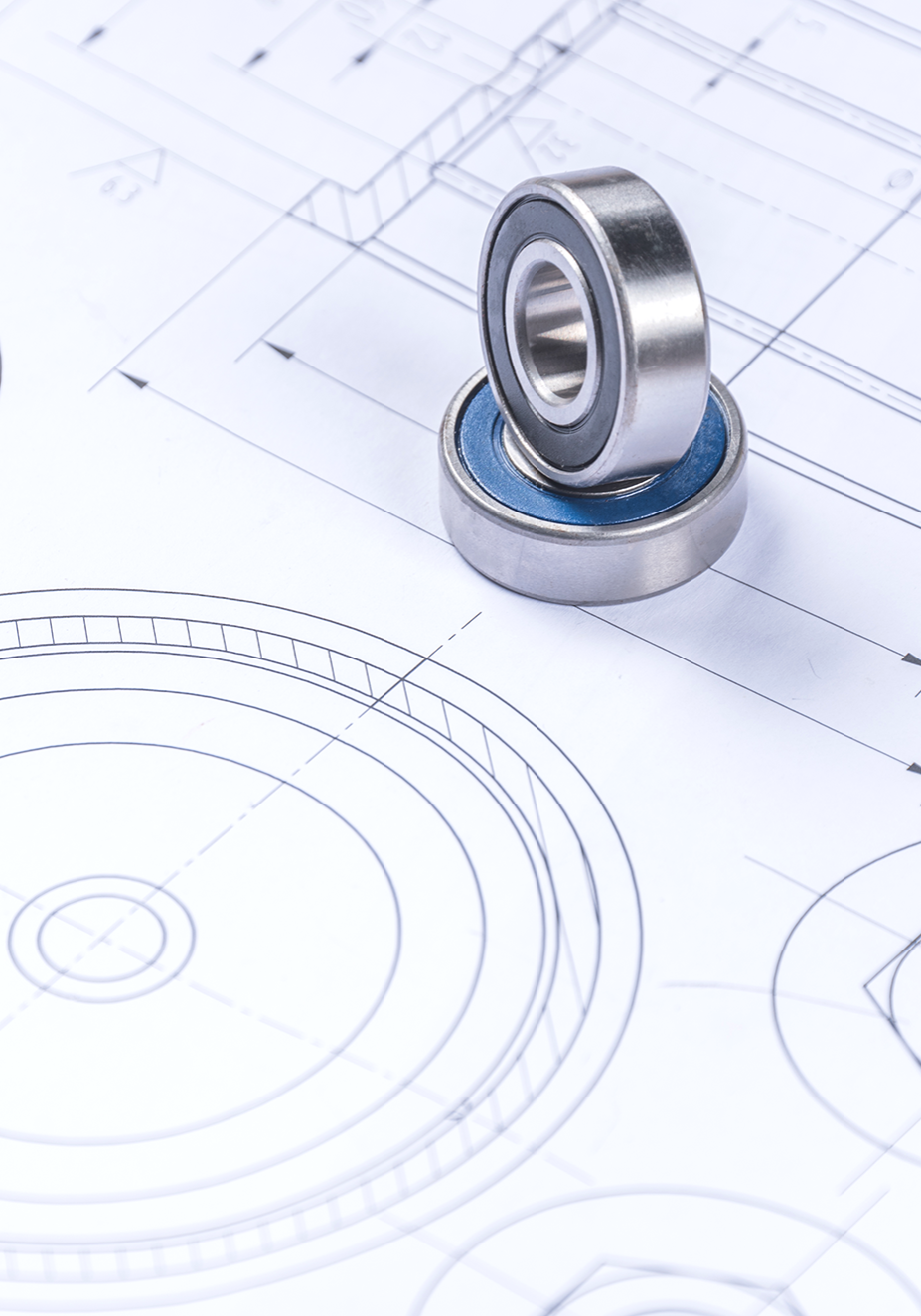
How to Choose the Right Bearing

A Complete Buyer's Guide

Every bearing is designed to handle a specific kind of load. Understanding this is the foundation of choosing the right part.

Radial load:


Axial load:

  • Force applied parallel to the shaft.
  • Best suited: thrust bearings.
  • These are typically found in applications where components push against each other, such as turntables or vertical shafts.


Combined load:


If you’re unsure which load your application produces, think about the direction of force during operation, this usually gives the answer. When in doubt, choosing a bearing designed for combined loads can offer extra safety and versatility.


Determine the Required Bearing Type

Different bearing types offer different performance characteristics. Here are the most common options:

Ball bearings
Versatile, low friction, ideal for high‑speed applications. They handle moderate radial and axial loads and are used in everything from electric motors to household appliances. 

Roller bearings
Designed for heavier loads at lower speeds. Their line‑contact design spreads the load over a larger surface area, making them ideal for industrial machinery. 

Tapered roller bearings
Excellent for combined loads. Their tapered shape allows them to handle high radial loads and significant axial forces in one direction. 

Needle bearings
Compact with a high load capacity, perfect for applications with limited space such as automotive transmissions and power tools. 

Thrust bearings
Designed specifically for axial loads. Common in rotating tables, vertical shafts, and automotive applications. 

Understanding the strengths of each type ensures your bearing can handle the forces and conditions of your application.

Measure the Bearing Dimensions

This is where most buying mistakes happen. You need three measurements:

Inner diameter (ID)

Outer diameter (OD)

Width

These measurements must be exact. Even a 1mm difference means the bearing won’t fit or may cause misalignment, leading to premature failure.


Tip: If you have the old bearing, check the reference number stamped on the side, it usually tells you the exact size, type and sometimes even the seal type.If the bearing is missing or damaged, using a digital calliper is the most accurate way to measure ID, OD and width.


Consider Speed Requirements

Bearings are rated for maximum rotational speed. Choosing incorrectly can cause overheating, noise or failure.

High‑speed applicationsBall bearings

Low‑to‑medium speed, heavy loadRoller bearings

Speed ratings depend on the bearing type, cage material, lubrication and seal type. For example:

  • Metal‑shielded bearings often allow higher speeds than rubber‑sealed ones.
  • Grease‑lubricated bearings typically have lower speed limits than oil‑lubricated ones.

If your machinery runs continuously or at high RPM, always check the manufacturer’s speed rating.

different types of bearings guide

Check Operating Environment

The environment dramatically affects bearing performance:

High temperature Choose heat‑resistant materials or special lubricants

Dusty or dirty conditions Sealed or shielded bearings

Wet or corrosive environments Stainless steel or corrosion‑resistant coatings


Other environmental factors to consider:

Vibration May require bearings with tighter tolerances or reinforced cages

Shock loads Tapered or spherical roller bearings often perform better

Chemical exposure Stainless steel or polymer bearings may be necessary

Choosing a bearing designed for your environment prevents contamination, wear, and early failure.

Choose the Right Seals and Lubrication

Lubrication is essential for reducing friction and extending lifespan.

Open bearings Require external lubrication

Shielded bearings Protect against larger debris

Sealed bearings Pre‑lubricated, maintenance‑free


Additional considerations:

Rubber seals offer better protection against moisture and fine dust.

Metal shields allow higher speeds and protect against larger particles.

Open bearings are ideal for applications with continuous oil lubrication.


For most general‑purpose applications, sealed bearings are the safest choice.

buyers guide for bearings

Confirm Load Rating and Durability

Every bearing has a dynamic and static load rating. These determine how much force it can handle safely.

Dynamic load rating → for rotating applications

Static load rating → for stationary loads

If your application involves shock loads or vibration, choose a bearing with a higher safety margin. 


Also consider:

Bearing clearance (C0, C3, etc.) → affects heat tolerance and noise

Material quality → higher‑grade steel improves fatigue life

Precision class → important for high‑speed or high‑accuracy applications

Match the Bearing to the Application

Here are common examples:

Electric motors → deep groove ball bearings

Automotive wheelstapered roller bearings

Conveyors → roller bearings

Power tools → high‑speed ball bearings


Other examples:

Agricultural machinery → sealed bearings to protect against dirt and moisture

HVAC systems → low‑noise, high‑speed ball bearings

Gearboxes → needle or tapered roller bearings


If you’re unsure, match your application to the manufacturer’s recommended bearing type.

Check Quality and Brand

Not all bearings are created equal. Premium brands offer:

Better materials
Longer lifespan
Higher precision
Lower noise

Cheaper bearings may work for light‑duty or temporary applications, but for critical machinery, always choose a reputable brand to ensure reliability and performance.

Ready to Find The Right Bearing?

How Can Bearing Depot Help?

Seek Product Support

Looking for more information about our products or have any questions? Submit our contact form and one of our specialists will be in touch with you as soon as possible.


Alternatively, you can:

Call us at
01952 676925

Email us at
sales@bearingdepot.co.uk

Please let us know what's on your mind. Have a question for us? Ask away.